It was later that afternoon that the reality finally sunk in.
 It's amazing how quickly that unified sense of remorse our nation felt dissolved into antagonistic groups immersed in either hatred or forgiveness. Prior to the War in Iraq, I remember that students at our school held peace protests near the flag pole. I also remember the counter-protesters with their own slogan. While I can barely remember anything that occurred at the peace protest, I remember being fixated on the crowd of youth waving a banner with the words "Bomb Iraq."
No it wasn't "Bring Terrorists to Justice". Or "End Tyranny in Iraq". Or "Bring Peace to the Middle East."

In other words: If kids raised in a white-collared suburban college-town community in Central Pennsylvania feel that blindly decimating an entire country's population with no regard as to whether the individuals they bomb are young, old, women, men, disabled, sick, etc. resolves the problems of evil and tyranny, then...
...what exactly goes through a kid's mind raised in a war-torn country?
That very night I remember hearing these words from our President, ""States like these and their terrorist allies constitute an axis of evil, arming to threaten the peace of the world."
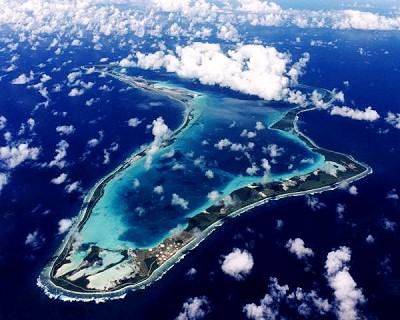

There are many testimonies online that discuss decreasing food supplies, violence, and threats to force the Chagossians to move. But I think the basic summary of the actions came on April 16th, 1971, less than 2 years after the Stonewall riots. The United Kingdom issued "British Island Overseas Territory Ordinance Number 1". It made it a criminal offence for any non-military personnel to live on the islands.
One can not even claim that this depopulation was the result of poor administration efforts. No. There was a malicious effort to deny Chagossians of any territorial claims. Eleanor Emery, the head of the territory issued the following message:
 ..."Apart from our overall strategic and defense interests, we are also concerned at present not to have to elaborate on the administrative implications for the present population of Diego Garcia [The largest island of the Chagos Islands] of the establishment of any base there.

- We would not wish it to become general knowledge that some of the inhabitants have lived on Diego Garcia for several generations and could, therefore, be regarded as 'belongers'.
- We shall advise ministers in handling supplementary questions to say that there is only a small number of contract workers from the Seychelles and Mauritius, engaged to work on the copra plantations."
- And in a dry, official document, the natives were disenfranchised.
- The compensation that was provided per head was 6,000 Pounds per head. 6,000 Pounds to relocate, find home, learn a new language, learn a new trade, and survive. The British government "kindly" offered additional money in 1979...but only to those who would relinquish any right to return to the Islands.

- Even as an American, I feel my hands are not clean. Because the military located there, is a combined British and US armed force. The depopulation of the islands was done by both British and US military personnel.
- But beyond a feeling of shame, I can't help but feel a strong feeling...the harsher and bitter feeling of irony being played here.
- In 1962, the President of United States, John F. Kennedy said, in regards to the creation of the state of Israel:
"This nation, from the time of President Woodrow Wilson, has established and continued a tradition of friendship with Israel because we are committed to all free societies that seek a path to peace and honor individual right."

- This blog entry isn't about imparting knowledge or wisdom. Because at this time I am at a loss. I can not even say that the "Trail of Tears" existed over a century ago. Less than a decade before my birth, another forgotten Trail of Tears occurred. But their woes have been forgotten...like tears in the salty ocean they crossed to their new homes.
- And I find myself confused. Who is the axis of Evil our President spoke of? Who is the axis of Good? And most importantly...who is righteous?

I read about the Chagossians after you posted abot them on Facebook, amd what stuck out to me was the fact that they were as artificial as any other population. To me it raised a big question of "who do we decide has legitimacy?" The idealist that still has a small corner of my cynical mind would like to say that might does not make right, but the Chagossians in particular were brought to the island by force as much as they were removed from the island by force, and within a turnaround of less than a century. If anything the Maldives had more of a historical claim to the land, even though they never permanently settled the island.
ReplyDeleteI am not defending Old World colonialism as an overall concept - it has a patchwork legacy that is, particularly in Africa and South Asia, largely negative. At the same time, when a community only exists as a colonial plantation, why would the colonial power that planted them not have the power/standing to remove them? I understand that there was/is a trauma of dislocation, but certainly it is far less in a peaceful relocation than a military conquest as has been the norm throughout history up until the post-1945 world.
ReplyDeleteI guess my issue with your statement is that it's not persay the Chagossians that were brought to the Islands that were later removed, but those in following generations. The Chagossians' reluctance to leave is no different from the majority of African Americans' reluctance to migrate to Liberia.
ReplyDelete